"The flag planted on the Moon had to be faked into looking like it was flying."

Every flag is a story.

Real chapters for every flag, and a memory schedule that does the remembering for you. Then seven ways to prove it, once you know your Chad from your Romania.

Free, with no sign-up to get through. Every flag works offline.

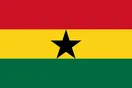
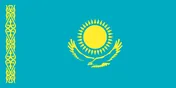
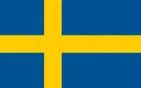
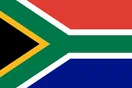
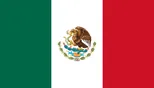
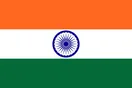
Flag of Japan Flag of Switzerland Flag of Brazil Flag of Nepal Flag of Canada Flag of Ghana Flag of Kazakhstan Flag of Sweden Flag of South Korea Flag of South Africa Flag of Mexico Flag of India

All 201 travel with the app at their true proportions. Nepal included.

201flags in the app, each with its own story
1,900+story sections, edited to one standard
7ways to play what you learn
180 daysthe far end of the memory ladder
Country stories

The part no flashcard app bothers with.

Nigeria's flag was drawn by a 23-year-old student who was never invited to the ceremony where it first flew. Every country gets chapters like that.

Symbol · The Student Who Won

Nigeria's flag was drawn by a student who was not even in the country. Michael Taiwo Akinkunmi, a 23-year-old engineering student in London, spotted a newspaper notice in 1959 calling for designs for the soon-to-be-independent nation and posted one off. It beat more than 2,000 entries.

From the app, word for word.

Flag anatomy

Tap the parts you always wondered about.

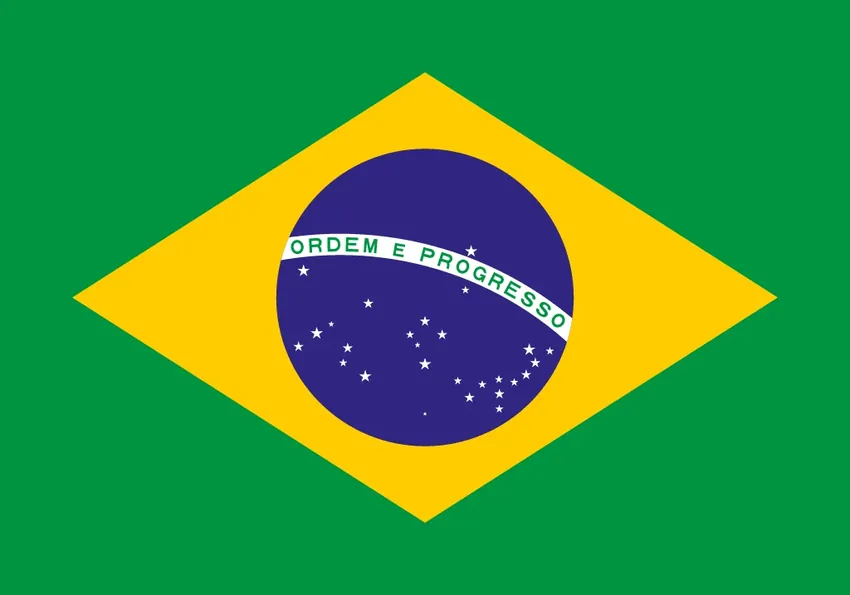
The blue globe on Brazil's flag is the sky over Rio at the moment the republic was proclaimed. Try the four markers below.

Flag of Brazil

Green field

The green background represents Brazil's vast rainforests and natural wealth. It was kept from the old Imperial flag to maintain continuity after the republic was proclaimed in 1889.

Yellow rhombus

The golden diamond shape symbolises Brazil's immense mineral wealth, particularly gold. Its four corners point to the cardinal directions.

Blue celestial globe

The blue circle shows the night sky over Rio de Janeiro on 15 November 1889, the exact moment the republic was proclaimed.

Ordem e Progresso

The white band across the globe reads "Ordem e Progresso" (Order and Progress), drawn from the positivist philosophy of Auguste Comte.

Tap a marker on the flag, or use the arrow keys.

The Flag Challenge

One lesson a day. Finishing early unlocks nothing.

That restraint is the method. New flags arrive right before you'd forget the last batch, and the run ends in an exam over all 196.

21 days

Sprint

Fast and focused. All the flags in three weeks.

About 14 new flags a day

66 days

Habit

Easy going. A few flags each day for a couple of months.

About 4 or 5 new flags a day

The exam

196 flags, one sitting or four

Split into resumable blocks so fatigue never fails you. Score 90% and the certificate is yours. Miss it, and you review exactly the flags you got wrong, then retake for free.

Ways to play

Pick your kind of pressure.

Flag Reveal

Six tiles hide a flag, and every wrong guess uncovers one. Each miss tells you how far off you were, and in which direction.

This one works right here. Which country is hiding?

A hidden flag

Tap the Map

No options to eliminate. A country's name appears and you find it on a map you pan and pinch yourself.

You tapped Uruguay
It was Paraguay

Daily Challenge

At midnight UTC the whole planet gets the same seven questions. You get ten seconds a question and one attempt, and then it is gone until tomorrow.

Day 47 · 6/7 · streak kept

Real-time battles

You and a rival answer the same questions at the same moment, progress bars crawling side by side.

Nobody around? GeoBot adapts to your rating and is never busy.

You
5/7
GeoBot
4/7
Question 6 · 3.2s left

Your Kind of Place

Thirteen sliders scored against every country, without your answers ever leaving the phone. Couple mode packs your taste into a link.

Cold & crisp
Hot & sunny
Quiet countryside
Big-city buzz

Classic quizzes

Flags, capitals, or everything mixed. Pick a region and a length, then turn on typed answers for when multiple choice feels soft.

15s5s3s1s0.5s ×5
The learn engine

Built to be put down.

Cramming feels productive and fades in a week. FlagStack schedules memory instead, then tells you when to stop.

A 180-day ladder

Every flag you get right comes back just before you'd forget it: an hour, six hours, a day, three days, out to 180. A miss restarts that flag at ten minutes.

Hard caps

Reviews stop at 12 cards a session and 25 a day, with an hour between sessions. Force-closing the app doesn't reset them. When FlagStack says you're done, you're done.

Seeded by play

Quiz answers feed the same scheduler. A right answer books that flag's next visit; a wrong one books it for ten minutes from now. Nothing you play is wasted.

None of this is our invention. A century of memory research keeps returning to the same two findings, that spaced practice beats cramming and that recalling something beats re-reading it.

Ebbinghaus, Über das Gedächtnis (1885) Cepeda et al., Psychological Bulletin (2006) Roediger & Karpicke, Psychological Science (2006) Dunlosky et al., Psychological Science in the Public Interest (2013)

It knows exactly which flag trips you up.

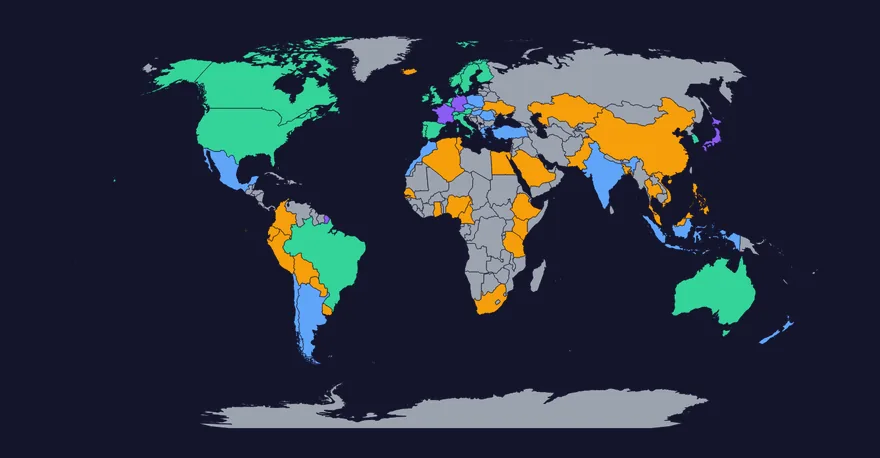
FlagStack scores you per flag, not per quiz. Each of the 201 climbs five tiers, the map tints as they rise, and weak flags quietly reappear until they behave.

Chad has tripped you up 3 times. Want to give it another go today?

Kazakhstan won't come back for a month. Your brain has genuinely held onto it.

Both lines are the coach word for word. It knows twenty situations and says one at a time, with a cooldown so the same nudge never repeats.

The app's world map tinted by mastery tier: Europe mostly green and violet, the Americas green and blue, Africa and Asia scattered amber, the rest still grey
Unseen Learning Familiar Mastered Expert

The Learn tab's map, about a month in, with the same geometry and colours the app draws.

201 flags, and what life is like beneath them.

Living Here

Skip the stats table. Each country page reads like a postcard, tinted by whether it is dawn or dusk there right now.

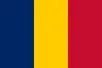
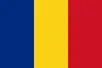
Flag of Chad vs Flag of Romania

Confusables

Chad and Romania differ by a shade of blue. FlagStack puts lookalikes side by side and drills you until they stop being twins.

Flag families

Flags travel in families. Once you have met the Nordic crosses, or worked out what the Pan-African colours have in common, every new member of that family gets easier to place.

Also in the box.

Fair questions.

What is FlagStack?

A free flag learning app for iOS and Android. It gives every one of its 201 flags a written story about where the design came from, then uses a spaced repetition schedule to decide when you see that flag again. Seven modes let you play what you have learned, from a planet-wide daily challenge to live 1v1 battles.

Is FlagStack free?

Yes. Every mode and every flag, with no ads anywhere near a question. An account is optional, and also free.

Do I need an account?

You will have one before you notice. FlagStack makes an account for you the first time you open the app, with a random username and avatar. It does not ask for an email address or a password, and there is no sign-up form to fill in. Everything works from that first minute, leaderboards and battles and your streak included. The one thing worth doing later is adding an email under Save Your Progress, because until you do, that account lives only on this device and a new phone would start from zero.

Does it work offline?

Yes, deliberately. Every flag, story and map ships inside the app, and your phone generates the quizzes rather than asking a server for them. Even the Your Kind of Place matching runs on the device. FlagStack reaches for a connection only when something genuinely needs one, which means battles, leaderboards and backing up your progress.

How is this different from a flag quiz app?

Most flag apps test recognition and stop there. FlagStack spends most of its effort on why a flag looks the way it does, told as 201 real stories, and on a memory schedule that decides when you should see each flag again. The quizzing is how you practise what you have read.

What is the best way to memorise all the country flags?

Space your practice out, and test yourself rather than re-reading. In practice that means seeing each flag at widening intervals instead of cramming them into one sitting, and actively recalling the answer before you check it. Learn look-alike flags side by side too, so you encode the difference rather than two separate blurs. Knowing why a flag looks the way it does gives memory something to hook onto, which is why FlagStack writes a story for every flag and schedules the reviews for you.

How long does it take to learn every flag?

FlagStack's Sprint track covers all of them in 21 days at roughly 14 new flags a day. The Habit track spreads the same material over 66 days at 4 or 5 a day. Both end in an exam over 196 flags, and neither can be rushed, because exactly one lesson unlocks per calendar day. Outside the challenge you can go at whatever pace you like, though reviews still stop at 25 cards a day.

Will it guilt me into a streak?

No. Reviews cap at 25 cards a day, the Flag Challenge unlocks exactly one lesson per day, and the app tells you when you're done. The streak is there if you want it, not held over you.

Why does FlagStack stop me at 25 cards a day?

Because the pause is doing the work. Cramming feels productive, but Ebbinghaus mapped how fast unrehearsed memory decays back in 1885, and a meta-analysis of hundreds of comparisons (Cepeda et al., Psychological Bulletin, 2006) confirmed that spaced study reliably beats massed study for lasting retention. The cap is not a paywall and not an energy meter. It exists to force the gaps that make the next review stick.

Why can't I finish the Flag Challenge faster?

One lesson unlocks per calendar day because the spacing is doing the teaching. Each return visit lands just as a flag starts to fade, which is the moment when recalling it strengthens memory most. Robert Bjork calls that a desirable difficulty. Dunlosky et al.'s 2013 review of ten study techniques rated this kind of distributed practice, along with self-testing, as the only two with high utility. Racing ahead would only refill tomorrow's forgetting.

Which flags are included?

All 201 currently in the app, each drawn at its true proportions (Nepal's pennants included). New flags are added by hand, each with a full story before it ships.

Is there a web or desktop version?

No. FlagStack is a phone app for iOS and Android. This site is just the marketing page plus the legal pages, and the only thing playable on it is the Flag Reveal demo.

When does it launch?

It is out now on Android, free on Google Play. The iOS version is still on its way, and the App Store button above goes live the day it ships.

The flags are waiting.

Out now on Android, with iOS to follow. Free, with no sign-up to get through.

Coming soon on theApp Store Get it onGoogle Play